
When a facility manager walks through a warehouse, factory, or industrial complex, a dull or grimy floor might look like a housekeeping problem. In reality, it’s a liability waiting to happen. Industrial floor cleaning safety directly affects worker health, regulatory compliance, and your company’s bottom line. If your floors aren’t being cleaned to a professional standard, you’re not just managing a cosmetic issue — you’re managing risk.
At Your Solution Maintenance Service (YSMS), we’ve spent over 26 years serving Bay Area and Tri-Valley industrial facilities. We see the same overlooked dangers again and again — and we know exactly how to address them before they become incidents.
Why Industrial Floor Conditions Are a Safety and Legal Issue
OSHA’s General Duty Clause requires employers to keep worksites free from recognized hazards that are likely to cause serious injury or death. Floors — particularly in manufacturing, warehousing, and distribution environments — are among the most cited hazard categories in workplace inspections.
Slips, trips, and falls account for a significant share of workplace injuries each year in California. The Bureau of Labor Statistics consistently ranks them among the top causes of lost workdays. When an employee slips on an oily floor, an improperly buffed surface, or a wet aisle that wasn’t marked or cleaned — that’s not an accident. That’s a foreseeable outcome of deferred maintenance.
Beyond OSHA exposure, dirty industrial floors affect your workers’ compensation premiums, your insurance standing, and in serious cases, your legal liability in personal injury claims. Proper floor care and polishing isn’t a luxury — it’s a documented risk management strategy.
The Hidden Hazards Most Facilities Ignore
Industrial floors collect more than dirt. Machine oil, coolant fluid, metal shavings, chemical residues, and moisture from HVAC condensation all accumulate on floor surfaces throughout the workday. These contaminants create traction problems that visual inspection alone won’t catch.
High-gloss floors that look clean can actually be slip hazards if the finish coat is worn unevenly. Concrete floors develop micro-pits and cracks that trap oil and bacteria. Anti-fatigue mats that aren’t cleaned beneath them become mold and moisture traps. None of these are visible at a glance — which is exactly why reactive cleaning isn’t enough.
What a Compliant Industrial Floor Cleaning Program Looks Like
A professional industrial floor cleaning program isn’t the same as running a mop across the surface at the end of a shift. OSHA-aligned floor care requires documented procedures, the right equipment, and trained personnel who understand industrial chemical safety.
Here’s what a structured program typically includes:
1. Daily Maintenance (Shift-Based)
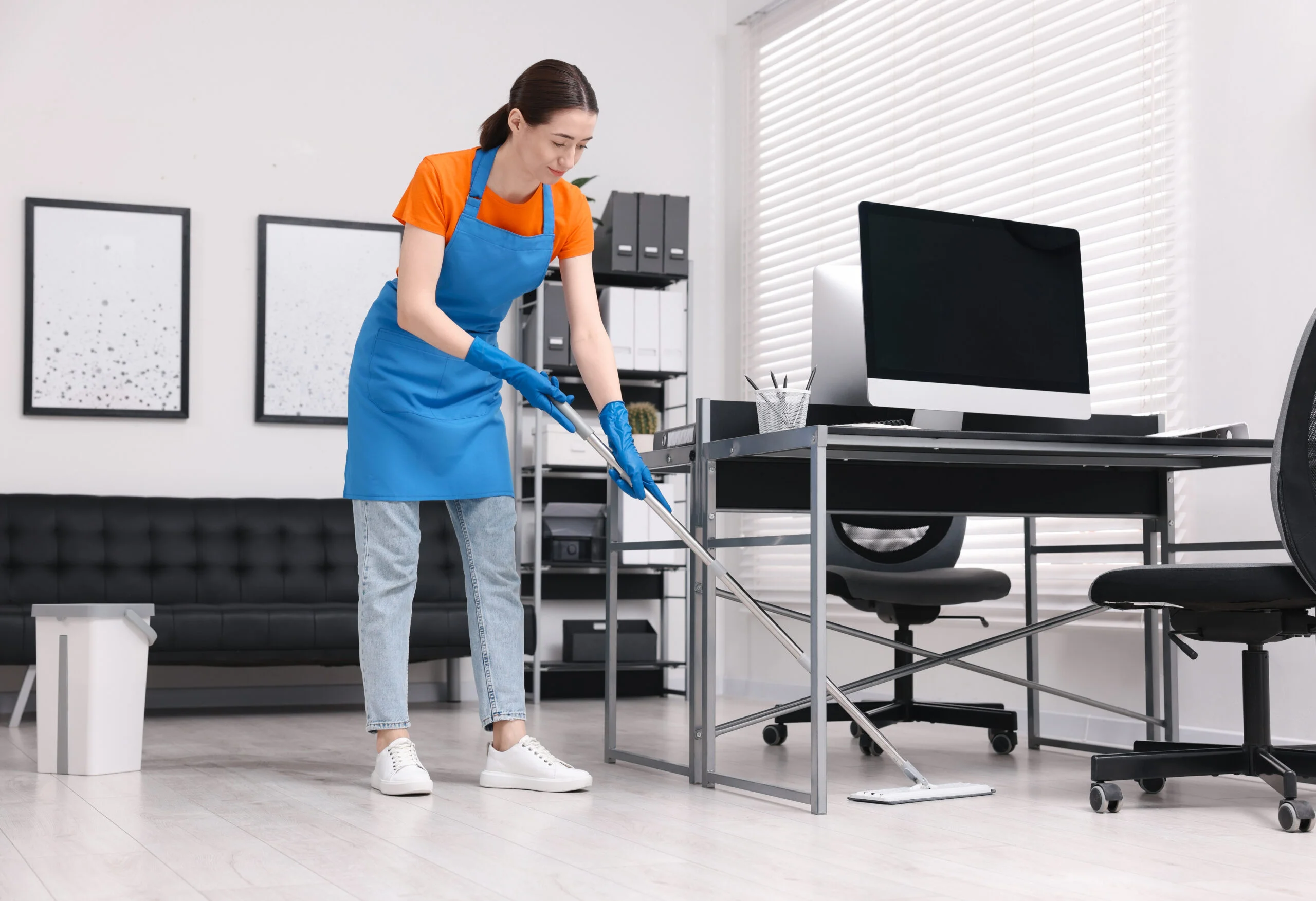
At minimum, high-traffic zones should be swept and spot-cleaned after every shift. Liquid spills must be addressed immediately — not at end of day. A day porter service can handle these real-time floor needs without pulling your production staff off task.
This level of ongoing attention is something YSMS builds into customized service plans for East Bay industrial clients. It’s not a one-size-fits-all schedule — it’s calibrated to your facility’s workflow, shift pattern, and floor type.
2. Weekly Deep Cleaning
Once a week, industrial floors should receive machine scrubbing or auto-scrubbing with appropriate pH-neutral or degreasing formulas. Equipment used on oily concrete requires different chemistry than equipment used on coated warehouse floors. Using the wrong products damages the surface and can actually reduce traction over time.
YSMS’s OSHA-compliant protocols and EPA-certified eco-friendly products ensure that your floor cleaning process doesn’t create new chemical hazards while eliminating existing ones.
3. Periodic Stripping, Recoating, and Polishing
Depending on floor type and traffic volume, coated floors need full stripping and reapplication every few months. This process removes accumulated wax buildup, evens out the finish, and restores the floor’s designed traction properties. Our floor care and polishing team handles this for Bay Area industrial complexes ranging from light manufacturing to heavy distribution.
5 Signs Your Industrial Floor Is Becoming a Safety Hazard
Many facilities don’t realize their floors have crossed the line until after an incident. Watch for these warning signs:
1. Visible pooling or slow drainage near floor drains. This usually indicates floor slope issues or drain blockage — but it also points to inadequate cleaning frequency in drainage zones.
2. Scuff marks, black streaks, or uneven sheen across coated floors. These indicate worn finish zones where traction is compromised.
3. A persistent chemical or musty odor. Odors often mean residue buildup or moisture trapped beneath mats or in floor seams.
4. Increased near-miss incidents or employee complaints about slippery surfaces. These are early warning signals that your current cleaning schedule isn’t meeting actual floor traffic demands.
5. Your cleaning crew can’t produce a documented cleaning log. OSHA inspectors look for evidence of ongoing maintenance. If there’s no log, there’s no proof — and no protection.
If your industrial complex shows any of these signs, it’s worth requesting a professional walkthrough before your next scheduled inspection — not after.
How to Choose a Floor Cleaning Provider for Industrial Facilities
Not every commercial cleaning company is equipped for industrial environments. When evaluating a provider, look for these qualifications:
- Licensed, bonded, and insured — YSMS carries $2M in coverage, which matters when your facility has high-value equipment and high foot traffic
- OSHA-trained staff who understand hazardous material handling and floor chemical safety
- Industrial-grade equipment — auto-scrubbers, wet vacuums, and burnishers appropriate for your floor type
- No long-term contracts — a reputable provider earns your business monthly, not with a locked-in agreement
- Documented cleaning protocols — so you have the paper trail OSHA expects

YSMS has maintained a 98% client retention rate across 26+ years serving the Bay Area and Tri-Valley — not because clients are locked in, but because results speak. Our account supervisor model ensures a dedicated point of contact who knows your facility and is accountable for every visit.
You can also explore our commercial cleaning services or learn more about affordable commercial cleaning options in the Bay Area to see how YSMS structures programs for different budget ranges.
Take the Safety Risk Off Your Facility's Floors
Industrial floor safety isn’t something that can wait for the next scheduled inspection. Bay Area and Tri-Valley facility managers trust YSMS to deliver consistent, OSHA-aligned floor care that protects workers, meets compliance standards, and keeps facilities running without interruption.
Request a free facility walkthrough and quote today. Call us at (510) 731-8447 or visit yoursolutionms.com to get started.
Frequently Asked Questions
OSHA Standard 29 CFR 1910.22 requires all walking-working surfaces — including floors, aisles, and service corridors — to be kept clean, dry, and orderly. Wet processes must include drainage or dry-standing provisions such as matting or platforms. Facilities that fail to meet this standard are subject to citations and fines, particularly after a workplace injury.
Frequency depends on your facility type and hazard profile. High-traffic production floors with active machinery, oil, or chemical exposure typically require daily or weekly professional attention. General warehouses may operate on weekly or biweekly schedules. A qualified provider will assess your specific zones and build a risk-based frequency plan aligned with your operational and compliance needs.
Standard janitorial cleaning addresses routine surface maintenance: mopping, sweeping, and trash removal. Industrial floor cleaning involves heavier-duty degreasing, zone-specific protocols for chemical and material contamination, shift-coordinated scheduling, and documentation that supports OSHA compliance records. It requires trained personnel, proper PPE, and industrial-grade equipment suited to your specific floor type.
Request documentation of their OSHA compliance protocols, Safety Data Sheets for all chemicals used on your site, and evidence of staff training records. A qualified provider should also carry substantial liability insurance — YSMS carries $2M in coverage — and be able to describe their specific approach to your floor type, your shift schedule, and your facility's hazard zones.
Yes. Residue, grime, and particulate buildup can interfere with machine guarding components, obstruct safety sensors, and create corrosive conditions on equipment bases. Regular professional floor maintenance protects both your workforce and your equipment investment, reducing maintenance events tied to contamination rather than normal wear.
Yes. Dust and fine particulate accumulation on industrial floors contributes to airborne contamination that OSHA Standard 1910.1000 limits for worker exposure. In facilities handling combustible materials, floor-level dust buildup also creates fire and explosion risk. Routine floor cleaning with appropriate equipment — not dry sweeping, which redistributes particles — directly reduces these airborne hazards.