
Your office carpet takes a beating every day. Foot traffic, spills, tracked-in Bay Area fog moisture, and years of rolling chairs all work against it. Replacing commercial carpet is one of the most expensive capital decisions a facility manager faces — costs can easily exceed tens of thousands of dollars depending on square footage. The good news? With the right maintenance strategy, well-chosen commercial carpet can last 10 to 15 years or more. The difference between a carpet that wears out in five years and one that lasts fifteen almost always comes down to one thing: proactive, consistent care. This guide gives Bay Area facility managers a practical, traffic-tested framework to protect that investment — zone by zone, week by week.
If you are already working with a professional carpet cleaning service that understands commercial environments, you are ahead of the curve. If not, this guide will show you exactly what that partnership should look like.
Why Office Carpet Wears Out Faster Than It Should
Most commercial carpet does not fail because of age. It fails because of neglect — specifically, the wrong cleaning frequency, the wrong methods, or no maintenance plan at all.
1- Soil is the primary enemy. Dirt and grit that settle into carpet fibers behave like sandpaper at a microscopic level. Every step grinds those particles deeper, abrading the fibers and accelerating visible wear. By the time traffic lanes appear — those dulled, matted pathways through lobbies and corridors — the damage is already irreversible.
2- The second culprit is reactive cleaning. Many facilities only schedule professional cleaning when carpets look visibly dirty. This is one of the most common and costly mistakes in facility management. Modern commercial carpets are engineered to hide soil — which means by the time the carpet looks bad, it has already lost years of useful life.
3- A third problem, often overlooked, is chemical cross-contamination. Using the wrong cleaning agents on carpet — or equipment that has been used on hard floors without proper separation — can strip fiber protectants, accelerate color fading, and leave residue that attracts more soil. YSMS uses a color-coded microfiber system specifically to prevent this kind of cross-contamination across different surfaces in your facility.
Build a Carpet Maintenance Plan Around Traffic Zones
Not all carpet in your building degrades at the same rate. A smart facility manager segments the building into traffic zones and sets cleaning frequencies accordingly.
Zone 1: High-Traffic Entry and Corridor Areas
Lobbies, entryways, elevator banks, and main hallways see the most foot traffic — and the most soil. These areas need daily vacuuming, immediate spill response, and interim cleaning every 60 to 90 days. Entry mats at every exterior door are essential: industry guidance calls for at least enough mat coverage for two to three full steps with each foot to effectively strip soil before it reaches the carpet.
Zone 2: Shared Mid-Traffic Areas
Conference rooms, break rooms, print areas, and open office corridors fall into this tier. Vacuum two to three times per week. Schedule interim cleaning every three to four months and a full hot water extraction deep clean annually.
Zone 3: Low-Traffic Private Offices
Private offices and rarely accessed storage areas can maintain appearance with twice-weekly vacuuming and an annual deep clean. However, do not skip them entirely — even low-traffic carpet can accumulate allergens, dust mites, and VOCs that affect indoor air quality and employee health.
Pairing this zone-based plan with day porter services ensures spills and high-traffic areas are addressed throughout the business day — before damage sets in.
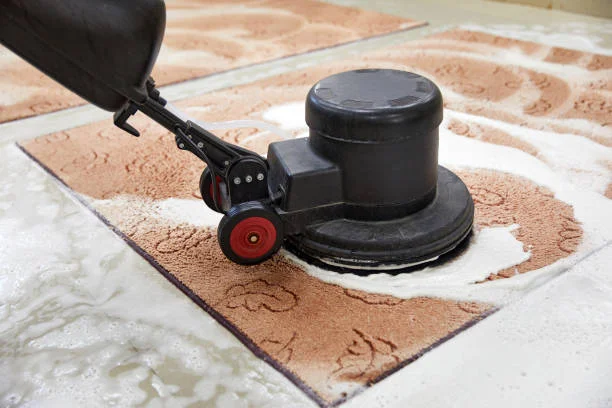
The Right Cleaning Methods at the Right Intervals
Understanding which cleaning methods to use — and when — is what separates a carpet that lasts from one that doesn’t.
1. Daily vacuuming is non-negotiable. Use equipment with a HEPA filter and CRI (Carpet and Rug Institute) Gold-Level certification to maximize dry soil removal without damaging fibers.
2. Interim cleaning (encapsulation or low-moisture methods) should be scheduled between deep cleans. This removes the mid-level soil that vacuuming misses and extends the time between more intensive services. Low-moisture methods also minimize downtime — critical for Bay Area offices that operate six or seven days a week.
3. Restorative deep cleaning via hot water extraction should happen at least once per year for all zones and quarterly for high-traffic areas. This method penetrates deep into the pile to remove embedded soils, bacteria, and allergens that interim methods cannot reach. It is also the standard required by most carpet manufacturers to keep warranties valid.
One method to avoid: bonnet cleaning. Despite being common, it only buffs the surface and can grind residue deeper into the fibers — shortening lifespan rather than extending it. Our commercial deep cleaning service covers all three intervals with a scheduled maintenance plan tailored to your facility’s traffic patterns, so nothing falls through the cracks.
Protect the Investment Before Damage Happens
Maintenance is not just about cleaning — it is about protecting the carpet between cleanings.
Apply fiber protectant after every deep clean. This restores the factory-applied protection that wears away with foot traffic and cleaning, helping liquids bead on the surface instead of absorbing into fibers.
Respond to spills within minutes. Blot — never rub — with a clean cloth. The longer a spill sits, the deeper it penetrates and the more likely it is to become a permanent stain.
Rotate furniture periodically. Static furniture compresses pile over time, creating permanent indentations. Moving desks and chairs slightly every few months distributes wear more evenly.
Use chair mats in all workstations. Rolling office chairs are among the most destructive forces on commercial carpet. Chair mats eliminate this entirely.
These small habits, reinforced by a reliable janitorial services partner, compound over years into significant cost savings. YSMS has maintained a 98% client retention rate for over 26 years — largely because our clients see the difference that consistent, proactive care makes to surfaces like carpet across their Bay Area facilities. For a broader look at how comprehensive building care protects every surface in your facility, see our guide to commercial cleaning in the Bay Area.
Frequently Asked Questions
With a proper maintenance program including daily vacuuming, interim cleaning, and annual hot water extraction, commercial carpet can realistically last 10 to 15 years. Without consistent care, the same carpet may need replacement in five to seven years — a significant unplanned capital cost for any Bay Area facility.
High-traffic zones such as lobbies, main corridors, and entryways should receive a professional deep clean at least every three to four months. Moderate-traffic areas like conference rooms need cleaning every six months, and low-traffic private offices at least once per year. Your cleaning provider should assess your building's specific patterns rather than applying a one-size schedule.
Hot water extraction (also called steam cleaning) is the industry-recommended method for restorative deep cleaning — it removes deeply embedded soils and bacteria that other methods miss and is required by most carpet manufacturers to maintain warranty coverage. For interim maintenance between deep cleans, low-moisture encapsulation is preferred because it reduces drying time and minimizes business disruption.
Yes — and this is one of the most important points for any facility manager. Modern commercial carpets are engineered to hide soil, so visible dirt is a lagging indicator of damage already done. By the time traffic lanes appear, fiber abrasion is irreversible. Facilities in San Ramon, Pleasanton, and Fremont that commit to proactive schedules consistently get more years out of their carpet than those that clean reactively.
Interim cleaning refers to surface-level professional cleaning done between full deep cleans — typically using low-moisture encapsulation. It removes mid-level soil build-up that daily vacuuming cannot address and delays the wear progression in high-traffic zones. For most Bay Area offices in Dublin, Danville, or Livermore, interim cleaning every 60 to 90 days in high-traffic areas is a sound investment that meaningfully extends carpet lifespan.
Yes. Many commercial carpet warranties specify approved cleaning methods and prohibit abrasive techniques like bonnet cleaning or the use of improper chemical agents. Cross-contamination — using cleaning products or equipment not designated for carpet — is another common warranty-voiding issue. YSMS uses a color-coded microfiber system and EPA-certified products to ensure cleaning methods are always appropriate for the surface being treated, protecting both your carpet and your warranty.