
When you hire a commercial cleaning company, one decision most facility managers never question is when the cleaning actually happens. Choosing between daytime janitorial service and after-hours office cleaning affects everything from employee productivity and building security to deep-cleaning quality and monthly costs. For Bay Area businesses managing office buildings, multi-tenant properties, or specialized facilities, this scheduling decision deserves real thought. There is no universal right answer — but there is a right answer for your building. Understanding the tradeoffs helps you design a cleaning program that works with your operations instead of against them. At YSMS, we have spent 26 years helping Bay Area and Tri-Valley facility managers build cleaning schedules that match how their buildings actually function.
What Daytime Janitorial Service Delivers
Daytime janitorial service places cleaning staff on-site during regular business hours. This is not simply a trend — it is a strategic model that solves problems traditional after-hours schedules create.
The biggest advantage is real-time responsiveness. Spills get addressed immediately. Restrooms are checked and restocked throughout the day, not just once overnight. When a client arrives at noon and someone left a mess in the lobby at 11:45, a daytime crew handles it before it becomes a first-impression problem.
Daytime service also simplifies your security footprint. After-hours cleaning requires granting access to a crew when no one else is in the building — involving key handoffs, alarm codes, and lockup procedures. Daytime service eliminates that exposure. Your cleaning team works while building access is already active and managed.
A third benefit is direct communication. When your facility manager and the cleaning crew share the same time window, adjustments happen in real time — special requests before a client meeting, areas flagged for extra attention, last-minute schedule changes — rather than through a note left on a desk.
The honest tradeoff: noise and workflow disruption. Vacuums, floor machines, and supply carts moving through occupied spaces can distract employees, especially in environments requiring concentration like law offices, call centers, or open-plan headquarters. Skilled crews sequence noisier tasks to low-activity windows — early mornings, lunch breaks, between meetings — but some coordination is required.
Why Many Buildings Still Choose After-Hours Cleaning
After-hours janitorial service has been the default model for decades, and for good reason. When a building is empty, cleaning crews can move through every area without navigating around people or equipment. No noise disruptions, no workflow interruptions, no wet floor signs in high-traffic hallways.
That unobstructed access enables deeper, more thorough work. Tasks like carpet extraction, floor polishing, high-dusting, and full restroom disinfection protocols are simply more efficient when crews are not working around active workstations. For buildings requiring intensive nightly cleaning — including industrial complexes, large office towers, and medical facilities — after-hours scheduling enables a level of thoroughness that daytime service cannot replicate.
Your team also arrives each morning to a freshly cleaned space with no memory of the process. That experience supports employee morale and creates a consistently professional environment for early arrivals and morning client visits.
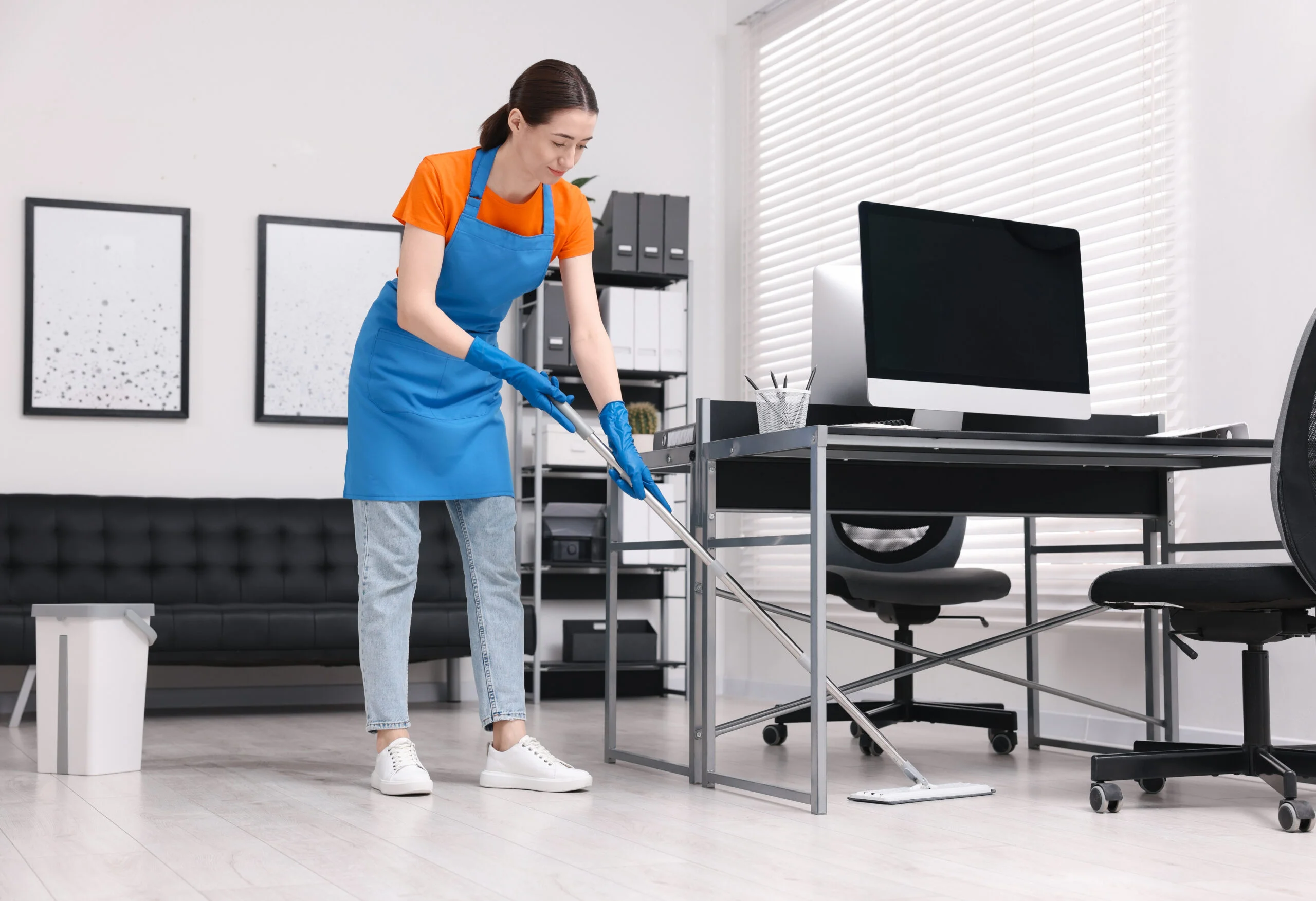
The tradeoff is accountability and access. After-hours crews operate without direct oversight from facility management. Issues discovered overnight may go unreported until the following morning. Building security is a legitimate concern — background verification, documented access protocols, and clear lockup procedures are non-negotiable for any provider handling after-hours access.
At YSMS, our after-hours teams are fully vetted, covered under $2M in liability insurance, and operate under our dedicated account supervisor model — meaning a named point of contact is accountable for every shift, not a rotating crew no one can identify. Our 98% client retention rate reflects how seriously we take that responsibility.
How to Decide: Four Factors That Matter
The right schedule depends on four factors specific to your facility.
Occupancy and operating hours: A traditional 9-to-5 office is a natural fit for after-hours cleaning. A co-working space, a company with multiple shifts, or a facility with extended evening hours may not have enough downtime for a reliable after-hours window — making daytime the more practical choice.
Deep-cleaning requirements: Buildings requiring regular carpet extraction, floor stripping and waxing, or intensive disinfection — particularly dialysis centers, medical offices, or industrial spaces — typically benefit from after-hours access where those tasks run without constraint. Our floor care and polishing and carpet cleaning services are built for exactly these environments.
Visitor and client traffic: High-visibility lobbies and conference-heavy environments benefit from at least some daytime coverage. A lobby that looks pristine at 9 a.m. can look very different by 2 p.m. with no one managing it mid-day.
Security sensitivity: Facilities handling confidential materials, high-value equipment, or patient data covered under HIPAA should weigh tolerance for unsupervised after-hours access carefully. Our janitorial services are built with compliance accountability at every stage.

The Hybrid Model: When You Need Both
Many Bay Area facilities find that neither a pure daytime nor pure after-hours model fully solves their needs. The hybrid approach — pairing a day porter during business hours with an after-hours crew for deep cleaning — delivers the best of both structures.
A day porter handles real-time tasks: restroom rotations, lobby upkeep, conference room resets, and spill response. The after-hours crew handles systematic, intensive work: vacuuming, full disinfection protocols, floor care, and high-touch surface sanitization. This combination works especially well at corporate campuses, healthcare facilities, and multi-tenant office buildings where common areas need continuous attention and individual suites need thorough nightly cleaning.
Our day porter services integrate alongside an existing after-hours program or stand alone for smaller facilities. If you want a framework for evaluating your overall approach, our ultimate office cleaning checklist and customized service options are useful starting points. Our commercial cleaning Bay Area team will walk you through a solution built around your building.
Stop Running Your Last Tenant's Cleaning Schedule
Most buildings default to whatever cleaning schedule the previous occupant had. As your headcount grows, hybrid work becomes normal, and client expectations rise, that inherited schedule rarely fits anymore.
YSMS has been helping Tri-Valley and Bay Area facility managers make the right call for over 26 years — backed by a 98% client retention rate, $2M in liability coverage, and a 100% satisfaction guarantee with a free re-clean within 24 hours. Call us at (510) 731-8447 or request a free facility walkthrough and we will help you design a schedule that actually matches how your building operates.
Frequently Asked Questions
Not necessarily. Daytime cleaning can reduce energy costs because building lighting and HVAC are already running during occupied hours — no need to power the facility for an after-hours crew. Total cost depends on your building size, task scope, and staffing level. A facility walkthrough gives you the most accurate comparison for your specific situation.
Daytime cleaning works best for businesses that need real-time responsiveness and want to simplify building access. It fits especially well for co-working spaces, medical clinics managing patient flow, retail environments, and corporate offices with frequent client visits where cleanliness is managed throughout the day — not just overnight.
Yes, when performed by a properly trained and documented crew. For medical offices and dialysis centers, after-hours cleaning must follow strict cross-contamination prevention and EPA-certified disinfectant protocols. YSMS uses a color-coded microfiber system that eliminates cross-contamination between zones, making our after-hours healthcare cleaning fully compliant and verifiable.
A hybrid model pairs a day porter during business hours with an after-hours janitorial crew for deep cleaning. It works best for high-traffic facilities — corporate campuses, healthcare offices, and multi-tenant properties in cities like San Ramon and Pleasanton — where both visible daytime maintenance and thorough nightly cleaning are required.
Choose a provider that conducts thorough background checks, maintains documented access and lockup protocols, and carries comprehensive liability insurance. YSMS covers every team member under a $2M liability policy and assigns a dedicated account supervisor to each account — giving clients a named contact and full visibility into who enters their building after hours.
Yes. We serve facilities throughout the Tri-Valley and East Bay — including Danville, Dublin, Livermore, and surrounding areas — with flexible scheduling that includes daytime, after-hours, and hybrid programs. We work around your building's operational needs and help you build a cleaning schedule that maintains your standards without disrupting your team.