
Facility managers ask us this question more than almost any other: how often should commercial floors be stripped and waxed? The honest answer is that it depends on your industry, your traffic volume, and your flooring type. There’s no single schedule that fits every Bay Area business.
At YSMS, we’ve been building custom floor care schedules for Bay Area and Tri-Valley facilities for over 26 years. That experience has taught us that guessing at a schedule costs more than it saves. Too little stripping and waxing leaves floors dull, slippery, and prone to permanent damage. Too much wastes budget on service your floor didn’t need yet.
This guide breaks down realistic strip-and-wax frequency by industry, the warning signs that your schedule needs adjusting, and how a dedicated account supervisor keeps your floor care on track year-round.
Why Strip-and-Wax Frequency Depends on More Than the Calendar
Floor finish doesn’t wear out on a fixed timeline. It wears out based on how many feet cross it, what those feet are tracking in, and what the floor is made of.
A dialysis center corridor sees wheelchairs, rolling equipment, and constant disinfectant exposure. A quiet back office sees light foot traffic and almost no chemical wear. Treating both the same way means one gets neglected and the other gets over-serviced.
Flooring material matters too. Vinyl composite tile (VCT) and linoleum need more frequent attention than sealed concrete or terrazzo. Our floor care and polishing service is built around this reality — we assess traffic patterns and floor type before recommending a schedule, not after.
How Often to Strip and Wax Commercial Floors, by Industry
Here’s what realistic scheduling looks like across the industries we serve most often in the Bay Area and Tri-Valley.
1- Medical Facilities and Dialysis Centers
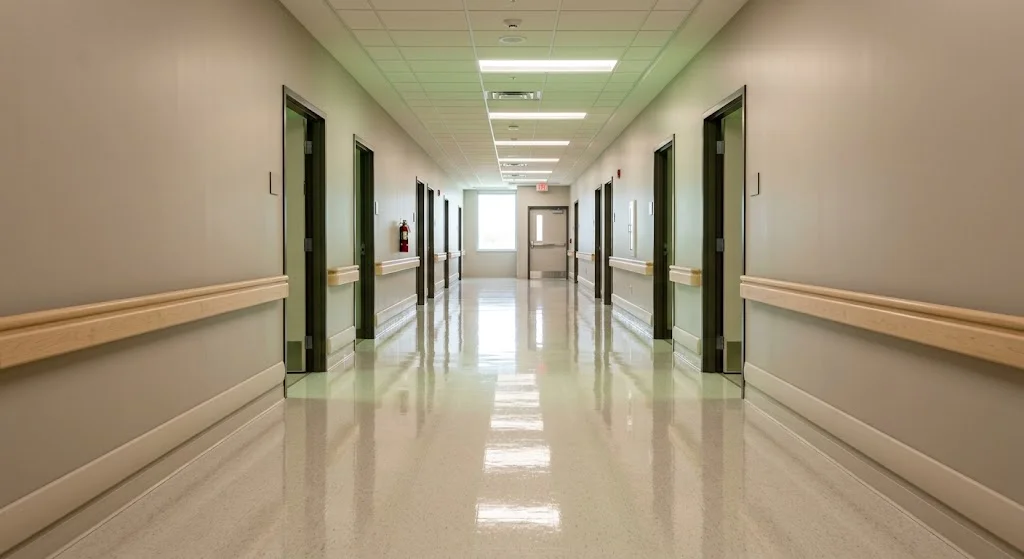
Healthcare floors face the toughest combination of factors: heavy equipment traffic, frequent disinfection, and zero tolerance for slip hazards. High-traffic corridors typically need a scrub-and-recoat every 4 to 6 months, with a full strip and wax on a 12- to 18-month cycle.
Dialysis centers push this further. Between patient mobility equipment and strict infection-control protocols, we often recommend more frequent scrub-and-recoat service in treatment areas. Our dialysis center specialization means we schedule this work around patient care, never during it.
2- Schools and Daycares
School floors take a beating for nine or ten months, then sit mostly idle over summer and winter breaks. That rhythm makes summer the natural window for a full strip and wax, with a scrub-and-recoat mid-year in gyms, cafeterias, and main hallways.
Facilities serving young children need extra attention to slip resistance, since spilled milk and wet shoes are a daily reality. Our schools and daycares clients typically land on a twice-yearly schedule for high-traffic zones.
3- Office Buildings and Property Management
General office space wears far more slowly than healthcare or education. Most Bay Area offices do well on a 6- to 12-month strip-and-wax cycle, with lobbies and entryways serviced more often than interior workspaces.
Property managers overseeing multiple tenants benefit from a single, coordinated schedule rather than reacting to individual tenant complaints. Our office buildings and property management clients typically consolidate floor care across common areas and leased suites under one plan.
4- Industrial Complexes and Warehouses
Industrial floors vary widely depending on what’s tracked across them. Facilities handling grease, chemicals, or heavy machinery traffic often need scrub-and-recoat service every few months, even if a full strip and wax happens only annually.
CalOSHA slip-and-fall standards make this more than a cosmetic decision for industrial complexes. Worn, slippery finish in a warehouse aisle is a liability risk, not just an appearance issue.
5- Retail and Common-Area Floors
Retail floors need to look sharp every day customers walk through the door. Most retail and lobby spaces do best on a 3- to 6-month cycle, since scuffs and dulling show up fast under bright lighting and constant foot traffic.
5 Signs Your Bay Area Facility Needs Floor Care Sooner
Even with a set schedule, watch for these signs that your floor needs attention ahead of the calendar:
- Dull, gray appearance that doesn’t respond to mopping. This means the finish itself is worn, not just dirty.
- Visible scuff marks that build up faster than usual. Traffic patterns may have changed since your last assessment.
- A tacky or slippery feel underfoot. This is a CalOSHA compliance concern, not just a maintenance one.
- Yellowing near entrances or high-moisture areas. Older finish layers trap dirt and discolor unevenly.
- Visitors or patients commenting on the floor’s appearance. First impressions matter most in medical and office lobbies.
If any of these show up early, don’t wait for the next scheduled service. Our 100% satisfaction guarantee includes a free re-clean within 24 hours if something isn’t right the first time.

Building a Floor Care Schedule That Actually Works
The biggest mistake we see facility managers make is applying one blanket schedule across an entire property. A medical office building might need quarterly attention in exam rooms and only annual service in back-office storage.
That’s why every YSMS client gets a dedicated account supervisor who tracks your floor’s actual condition over time, not just a date on a calendar. This accountability model — paired with our 98% client retention rate — is why so many Bay Area facilities stay with us year after year.
We also carry $2M in liability coverage and follow CalOSHA and EPA-compliant protocols on every job, so you’re protected whether we’re stripping a hospital corridor or waxing a school gym floor. And because we don’t require long-term contracts, your schedule can flex as your facility’s traffic changes.
If you’re budgeting for this service, our pricing guide breaks down typical cost ranges by facility size and floor type. Pairing floor care with a broader commercial cleaning program also helps you plan maintenance budgets further ahead.
Let's Build the Right Floor Care Schedule for Your Facility
A dull, worn floor undercuts every other impression your facility makes, no matter how clean the rest of the building looks. YSMS builds custom strip-and-wax schedules for Bay Area and Tri-Valley facilities based on your actual traffic and flooring type, not guesswork.
Call (510) 731-8447 for a free facility walkthrough and floor care quote. We’ll assess your space and recommend a realistic schedule backed by our 100% satisfaction guarantee.
Frequently Asked Questions
Most commercial floors need a full strip and wax once or twice a year, with scrub-and-recoat service in between to extend the finish. High-traffic industries like healthcare and schools need more frequent attention than general office space.
Stripping removes every layer of old finish down to the bare floor before new coats are applied. Scrub and recoat removes only the top worn layer, which costs less and can be done more often between full strips.
A high retention rate reflects consistent, dependable service over time, which matters for something as visible as your floors. Our 26+ years serving Bay Area facilities means we've seen how every industry's floors actually wear.
Yes. Over-waxing builds up layers that trap dirt, yellow over time, and can actually make floors more slippery. A proper assessment prevents both over- and under-servicing.
Absolutely. VCT and linoleum need more frequent stripping and waxing than sealed concrete, terrazzo, or tile, which hold their finish much longer.
We schedule floor care around your facility's actual traffic patterns, whether you're in Pleasanton, San Ramon, or elsewhere in the Tri-Valley. Our account supervisors coordinate timing to minimize disruption to your operations.