
Most Bay Area business owners know their facility needs to be cleaned regularly. What’s harder to figure out is how often, what specifically, and in what order. A poorly built commercial cleaning schedule leads to missed tasks, inconsistent results, and a workspace that slowly starts to undermine your team’s health and your clients’ first impressions. With over 26 years serving Bay Area and Tri-Valley businesses, YSMS has helped hundreds of facility managers move from reactive spot-cleaning to strategic, schedule-driven cleanliness. Here’s a practical guide to building a commercial cleaning schedule that actually works for your operation.
Why Your Cleaning Frequency Depends on More Than Square Footage
The most common mistake businesses make is choosing a cleaning frequency based on space size alone. In reality, the right schedule depends on four factors working together: traffic volume, industry type, facility zones, and compliance requirements. A 2,000 sq ft medical waiting room demands a fundamentally different cleaning cadence than a 2,000 sq ft software office. One serves immunocompromised patients with strict OSHA and infection control standards; the other handles moderate daily foot traffic with standard hygiene expectations.
Before you build your schedule, answer these three questions:
1- How Many People Move Through Your Facility Daily?
High-traffic spaces — lobbies, restrooms, break rooms, and conference rooms — soil faster and carry higher pathogen loads. In a busy Bay Area office building, these zones may need attention multiple times per day, not just once overnight.
2- What Industry Are You In?
Medical facilities, dialysis centers, schools, and property-managed buildings all operate under specific compliance standards. An office building in the East Bay has different regulatory obligations than a daycare or industrial complex. Your cleaning schedule must reflect those requirements, not ignore them.
3- Do You Have Any Zones with Cross-Contamination Risk?
Restrooms, kitchens, and medical prep areas introduce bacteria and pathogens that can easily migrate to desks, door handles, and shared equipment if not managed with a disciplined approach. YSMS uses a color-coded microfiber system — assigning specific cloth colors to specific zones — so that a cloth used in the restroom never touches a countertop in the break room. This system should be built into your schedule design, not treated as an afterthought.
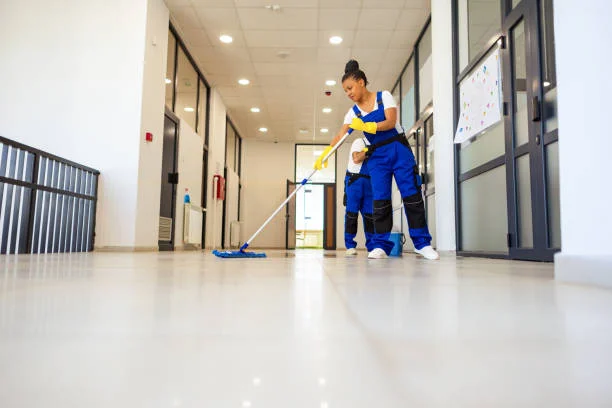
Building a Frequency Framework: Daily, Weekly, and Monthly Tasks
A well-structured commercial cleaning schedule separates tasks into three tiers. Here’s how to think about each one.
Daily Cleaning (High-Touch, High-Traffic Areas)
These are the non-negotiables that affect hygiene and first impressions every single day:
- Restroom sanitization and restocking
- Trash removal from all workstations and communal areas
- Kitchen and break room wipe-downs (counters, sinks, appliance exteriors)
- Lobby and entrance sweeping, mopping, or vacuuming
- Disinfection of high-touch surfaces: door handles, elevator buttons, light switches, shared equipment
For businesses with significant daytime activity, a day porter service handles these tasks in real time — keeping restrooms stocked, spills addressed, and common areas presentable throughout business hours rather than waiting for an overnight crew.
Weekly Cleaning (Maintenance-Level Tasks)
Weekly tasks maintain the cleanliness built by daily routines and prevent gradual buildup:
- Full vacuuming of carpeted areas, including under desks and along baseboards
- Mopping all hard-surface floors with appropriate solutions
- Interior window and glass cleaning
- Thorough disinfection of communal surfaces: conference tables, reception desks, shared workstations
- Dusting horizontal surfaces, vents, blinds, and light fixtures
Monthly and Periodic Deep Cleaning
Over time, soil accumulates in areas that daily and weekly routines can’t fully address. Monthly or quarterly tasks include:
- Carpet deep cleaning to remove embedded dirt, allergens, and odors
- Floor care and polishing for VCT, tile, and hardwood surfaces
- Exterior window cleaning
- Exhaust vent and supply duct cleaning
- Deep sanitization of breakroom appliances and behind equipment
If your facility has gone more than six months without a structured deep cleaning service, the monthly and daily routines are working on a dirtier baseline than you realize.
The Accountability Gap Most Schedules Miss
Building a checklist is the easy part. Enforcing it consistently is where most commercial cleaning arrangements break down. Many Bay Area businesses hire a janitorial company and assume the schedule runs itself — only to discover missed tasks, inconsistent crews, and no one to call when standards slip.
YSMS addresses this through an account supervisor accountability model. Every client is assigned a dedicated supervisor who conducts quality checks, manages crew consistency, and serves as your direct point of contact. This structure is why YSMS maintains a 98% client retention rate across Tri-Valley and Bay Area accounts — the schedule doesn’t just exist on paper; someone is responsible for making sure it’s executed to standard every time.
If your current provider doesn’t offer a named point of accountability, that’s a gap worth addressing before your next contract renewal.
How to Adjust Your Schedule as Your Business Evolves
A cleaning schedule is not a set-it-and-forget-it document. Several triggers should prompt a schedule review:
- Headcount changes: More employees mean more high-touch surface contact and higher restroom demand.
- Seasonal shifts: Cold and flu season typically warrants increased disinfection frequency.
- Post-renovation or construction: Dust, debris, and altered traffic patterns require a temporary schedule adjustment.
- Change in facility use: Adding a conference center, daycare room, or medical suite changes your compliance obligations entirely.
YSMS offers customized cleaning plans that evolve alongside your business — no rigid franchise template, no long-term lock-in. Your schedule should match your operation, not the other way around.
Frequently Asked Questions
Most Bay Area offices benefit from daily cleaning of high-touch and high-traffic areas — restrooms, entrances, kitchens, and shared surfaces — with a full weekly service covering floors, dusting, and glass. Facilities with 30+ employees or client-facing spaces typically need daily janitorial coverage to maintain a professional standard.
A day porter operates during business hours, handling ongoing tasks like restroom checks, spill cleanup, lobby tidying, and restocking. A nightly janitorial crew performs deeper, uninterrupted cleaning after staff leaves. Many Bay Area businesses benefit from combining both — the day porter maintains real-time presentation while the overnight crew handles systematic cleaning.
Common signs include recurring odors in restrooms or kitchens, visible dust buildup on horizontal surfaces, frequent employee complaints about cleanliness, or clients commenting on the state of shared spaces. If your schedule hasn't been reviewed in over six months, it's worth a fresh evaluation — especially if your team or facility usage has changed.
Yes, especially for medical offices, dialysis centers, industrial facilities, and schools. OSHA standards dictate specific protocols for biohazard disposal, chemical handling, ventilation, and surface disinfection. Your cleaning provider should document compliance-aligned tasks in your schedule, not just general cleaning activities.
Medical facilities require stricter infection control protocols, zone-specific disinfectants, and HIPAA-aware cleaning procedures — especially in exam rooms, waiting areas, and restrooms. A standard office in Pleasanton or San Ramon operates under general hygiene standards. YSMS builds schedules around each facility's specific compliance tier, never applying a one-size-fits-all approach.
High-traffic lobbies in Dublin or Fremont businesses should include daily floor maintenance, real-time spill response (via day porter if volume warrants it), high-touch surface disinfection at least twice daily, and a weekly deep vacuum and polish cycle. These areas form the first impression every visitor receives — their cleanliness standard should reflect your business's reputation.