
If you’ve ever walked into your office on a Monday morning and noticed trash overflowing, smudged glass, or restrooms that clearly weren’t serviced over the weekend — you already know the answer: not often enough. But for most Bay Area facility managers, the harder question isn’t whether to clean. It’s how often. Get the frequency wrong in either direction, and you pay the price — either through a visibly dirty workspace that drives clients away, or through over-scheduled cleaning that strains your budget without adding real value. This commercial cleaning frequency guide breaks down what businesses in the Tri-Valley and broader Bay Area actually need — by facility type, space use, and traffic volume — so you can make a confident, informed decision.
Why Cleaning Frequency Matters More Than Most Businesses Realize
Cleanliness is about far more than appearances. The frequency of your commercial cleaning directly affects employee health, OSHA compliance, and the first impression you make on every client or visitor who walks through your door. Studies from the CDC and workplace health researchers consistently link high-touch surface contamination to employee absenteeism. In shared offices with moderate foot traffic, bacteria on a single contaminated desk can spread to more than 50% of surfaces in a building within hours. That’s not a hypothetical — it’s a documented reality that Bay Area businesses with under-scheduled cleaning face every week.
Beyond health, there’s a compliance dimension. Facilities in regulated industries — medical offices, dialysis centers, schools, and childcare operations — are subject to OSHA and HIPAA standards that carry real consequences when cleaning protocols are inadequate. Having the right cadence isn’t optional in those environments; it’s a legal requirement.
The Right Cleaning Frequency by Business Type
There’s no universal answer to how often a business should be cleaned. The correct schedule depends on your industry, occupancy level, and the specific areas within your facility. Here’s how to think about it.
1- Office Buildings and Corporate Spaces
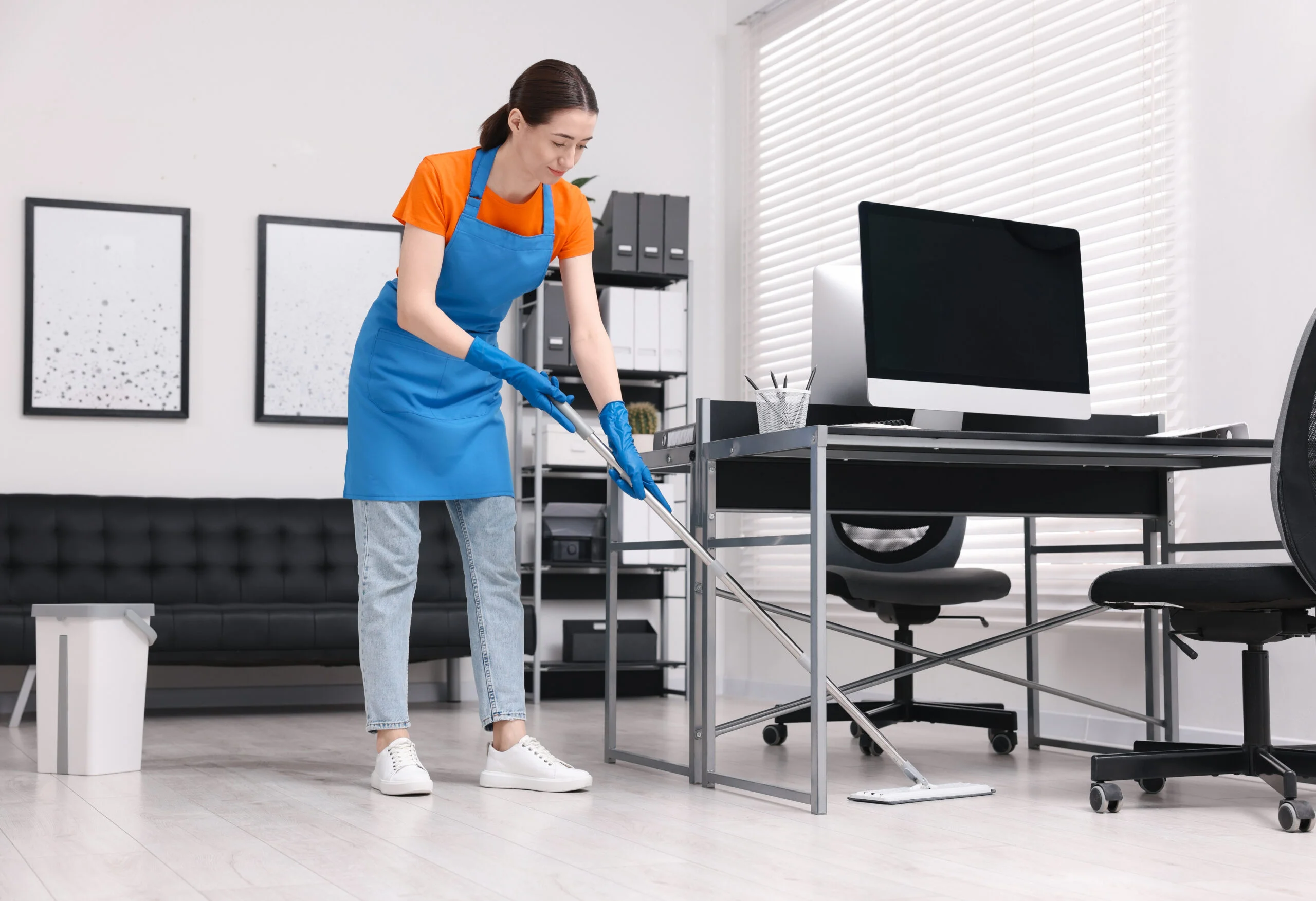
Standard office environments with 20–50 employees typically need professional janitorial services five days per week. This covers daily tasks — emptying trash, sanitizing restrooms, wiping common surfaces, and vacuuming high-traffic corridors.
Weekly additions should include thorough kitchen and break room sanitization, interior window cleaning, and spot-cleaning of carpet and upholstery. Monthly services should address deep cleaning tasks: baseboards, vents, detailed restroom descaling, and floor care and polishing for hard-surface areas.
High-occupancy offices — those with 50 or more employees or heavy daily visitor flow — often benefit from adding a day porter to maintain restrooms, lobbies, and common areas in real time during business hours.
2- Medical Offices and Healthcare Facilities
Medical environments require a fundamentally different approach. Exam rooms, waiting areas, and any surface patients contact must be disinfected between uses — not just daily. Weekly deep cleaning of the full facility is the minimum standard, with monthly attention to less-trafficked clinical storage and administrative areas.
For over 26 years, YSMS has cleaned healthcare facilities across the East Bay using a color-coded microfiber system that prevents cross-contamination between zones — a critical safeguard that generic cleaning crews often overlook. Our dialysis center specialization reflects how seriously we take infection control protocols in these settings.
3- Retail Storefronts and Mixed-Use Properties
Retail spaces with consistent daily foot traffic need daily surface sanitization, restroom servicing, and floor cleaning. Carpet cleaning should be scheduled quarterly at minimum — monthly in high-foot-traffic entry zones. Hard floors in entryways may need daily damp mopping and quarterly polish depending on the season and surface material.
Property managers overseeing multi-tenant buildings often find that a consistent weekly janitorial program for shared spaces — lobbies, elevators, stairwells, and parking structures — is essential for tenant satisfaction and lease renewals.
Factors That Should Adjust Your Cleaning Schedule
Even within a category, your cleaning frequency should flex based on real conditions in your facility.
Occupancy density. A 3,000-square-foot office with 8 employees has very different needs than the same space with 35. More people means faster surface contamination, higher restroom usage, and greater lunchroom mess.
Client-facing activity. If clients, patients, or customers regularly enter your space, cleanliness becomes a direct trust signal. A lobby that’s cleaned nightly leaves a markedly better impression than one serviced twice weekly.
Seasonal fluctuations. Cold and flu season — roughly October through March in the Bay Area — is when inadequate cleaning frequency has the most direct impact on employee sick days. Temporarily increasing your schedule during these months is a cost-effective investment.
Post-event or post-renovation needs. After large meetings, office events, or construction work, a one-time deep cleaning resets the facility to baseline before routine service resumes.
Signs Your Current Cleaning Schedule Isn't Frequent Enough
Sometimes the schedule looks right on paper but doesn’t hold up in practice. Watch for these signals:
1- Restrooms are visibly dirty before the end of the business day. If restrooms are deteriorating by 2 PM, daily cleaning isn’t enough — and neither is a reactive response after the fact.
2- Trash cans overflow before pickup day. This is a volume-and-frequency mismatch. Your cleaning schedule should account for your actual waste generation, not an assumed average.
3- Employees are complaining or getting sick more often. Recurring cold and flu clusters among staff in the same workspace often point to shared surface contamination from under-cleaned break rooms, keyboards, phones, and door handles.
4- Clients have mentioned the smell or appearance of your space. Once a client notices, you’ve already made an impression that’s hard to reverse.
A customized facility assessment — which YSMS offers at no charge — is the most direct way to identify whether your current schedule matches your actual needs.
Frequently Asked Questions
High-traffic office restrooms should be cleaned at minimum daily — and ideally serviced mid-day by a day porter in facilities with 20 or more occupants. Monthly deep cleans addressing grout, drains, and descaling are essential regardless of daily frequency.
Most commercial carpets in moderate-traffic Bay Area offices should be professionally cleaned every three to six months. High-traffic entry zones and client-facing areas may need monthly attention. Interim vacuuming should occur daily in high-use areas to extend the life of your carpet investment.
Yes. OSHA's General Duty Clause requires employers to maintain a workplace free from recognized hazards — and contamination from inadequate cleaning qualifies. Regulated industries including medical, dialysis, and food-service facilities face additional sector-specific requirements with defined cleaning intervals.
Most Bay Area businesses benefit from a professional deep clean quarterly, with additional sessions following high-traffic events, seasonal peaks, or post-renovation work. Regulated facilities — medical offices, dialysis centers, and schools — typically require monthly deep cleans at minimum.
Daily tasks include trash removal, restroom sanitization, high-touch surface disinfection, and vacuuming of primary traffic areas. Weekly tasks cover kitchen deep-cleaning, conference room sanitization, interior window spot-cleaning, and floor mopping. Monthly tasks address floor polishing, vent and baseboard cleaning, and carpet spot treatments. Can businesses in Pleasanton or San Ramon get a customized schedule? Absolutely. YSMS serves the full Tri-Valley — including Pleasanton, San Ramon, Danville, Dublin, and Livermore — and we build cleaning schedules around your facility's specific size, occupancy, and industry requirements, not a generic template.
Absolutely. YSMS serves the full Tri-Valley — including Pleasanton, San Ramon, Danville, Dublin, and Livermore — and we build cleaning schedules around your facility's specific size, occupancy, and industry requirements rather than a one-size-fits-all template. Our 98% client retention rate reflects how well that approach works.