
If your facility has ever dealt with an unexplained illness outbreak among staff, the cleaning cloths in the janitorial closet may be part of the problem. Color-coded microfiber cleaning is a system where different colored cloths and mops are assigned to specific areas, so germs from a restroom never touch a break room counter or a reception desk. For Bay Area facility managers juggling offices, medical suites, and shared common areas, this small detail makes a measurable difference. It’s one of the simplest ways to reduce the spread of bacteria and viruses without adding cost or complexity to a cleaning routine.
At Your Solution Maintenance Service (YSMS), color-coded microfiber cleaning has been part of our standard protocol for years, refined across 26+ years serving Bay Area and Tri-Valley businesses. Below, we’ll explain exactly how it works and why it matters for your workplace.
Why Color-Coded Microfiber Cleaning Matters for Bay Area Businesses
Cross-contamination happens when a cleaning cloth used on a contaminated surface, like a toilet handle, gets used again on a surface people touch often, like a doorknob or desk. Without a system in place, this is nearly impossible for a cleaning crew to track manually.
Bay Area businesses face higher stakes than most. Dense office buildings, shared elevators, and open-plan workspaces mean germs travel fast between employees. A single inconsistent cleaning crew can quietly contribute to higher absenteeism and lost productivity.
Color-coding solves this by removing guesswork. Each cloth’s color tells a cleaning technician exactly where it belongs, and just as importantly, where it doesn’t.
How the Color-Coded Microfiber System Works
The system itself is straightforward, but consistency is what makes it effective. YSMS follows an industry-standard four-color protocol across every commercial cleaning assignment.
1- The Four-Color Standard
Typically, red cloths are reserved for restrooms and high-risk surfaces. Yellow is used for other restroom areas that don’t involve direct waste contact. Green is designated for kitchens and break rooms. Blue covers general-use areas like offices, lobbies, and conference rooms.
Because the colors never cross over between zones, a technician cannot accidentally carry bacteria from a restroom into a space where people eat lunch or answer phones.
2- Training and Consistency
A color-coded system only works if every technician follows it every time, on every shift. This is where many janitorial companies fall short — protocols exist on paper but aren’t reinforced in practice.
YSMS addresses this through our account supervisor accountability model. A dedicated supervisor checks in regularly to confirm protocols like color-coding are being followed correctly, not just assumed.
Best Practices for Cross-Contamination Prevention
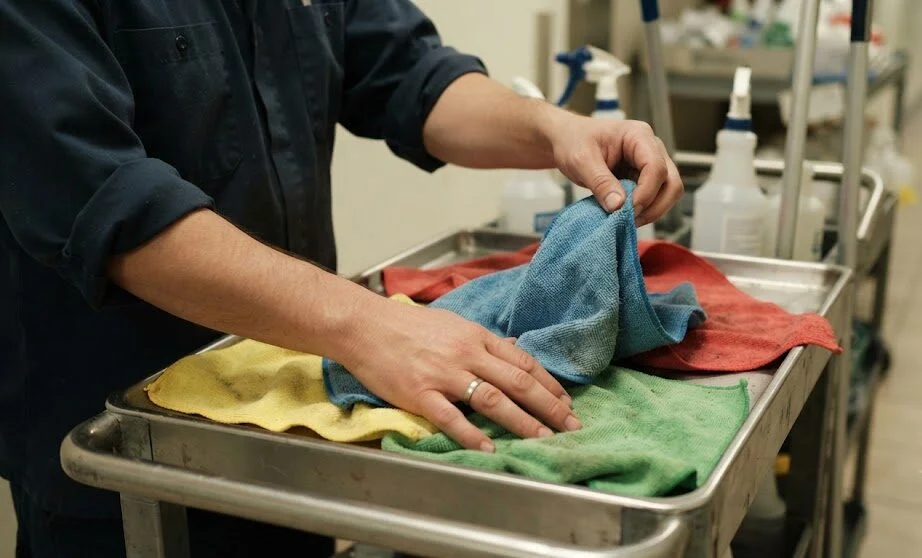
Beyond color-coding, a handful of other practices reinforce cross-contamination prevention throughout your facility.
Daily Protocols That Reduce Risk
Cloths and mop heads should be laundered daily, never reused across zones, and replaced immediately if visibly soiled. Microfiber itself also matters here — it traps more bacteria per pass than cotton rags, so quality of material is part of the equation, not just color.
Facilities benefiting from disinfection cleaning should confirm their provider pairs color-coding with EPA-certified disinfectants, since color-coding alone doesn’t kill pathogens — it prevents spreading them.
High-Risk Areas Deserve Extra Attention
Restrooms, kitchens, and any surface touched frequently by multiple people (door handles, light switches, shared equipment) should receive more frequent attention than general office space. A checklist for cross-contamination prevention should flag these zones specifically, rather than treating every surface the same.
Compliance and Industry Standards
Color-coded cleaning isn’t just a best practice; it’s increasingly expected in facilities that follow OSHA and EPA guidance, particularly in healthcare-adjacent environments.
OSHA Compliance and Documentation
OSHA doesn’t mandate a specific color scheme, but it does require documented procedures for preventing exposure to bloodborne pathogens and other biohazards in applicable settings. A consistent color-coded system is one of the clearest ways to demonstrate that documentation in practice, not just on paper.

Specialized Facilities Need a Higher Standard
Some environments carry more risk than a typical office. Dialysis centers, for example, require exceptionally strict sanitation protocols due to immunocompromised patients and shared equipment. YSMS’s specialization in dialysis center cleaning reflects how seriously we treat this standard, and the same rigor extends to any medical facility we service.
For any business weighing whether their current provider’s protocols hold up, it helps to ask directly how color-coding, training, and supervision are handled — not just whether a checklist exists.
Get a Cleaning Plan Built Around Your Facility's Risk Areas
A color-coded microfiber system is a small operational detail with an outsized impact on the health of everyone who walks through your doors. If you’re not confident your current cleaning provider is doing this consistently, it’s worth a second look.
YSMS has served Bay Area and Tri-Valley facilities for over 26 years, backed by a 98% client retention rate and no long-term contracts required. We offer customized cleaning plans built around your facility’s specific risk areas, along with a free facility walkthrough and quote. Call us today at (510) 731-8447 to get started.
Frequently Asked Questions
Color-coded microfiber cleaning assigns specific cloth and mop colors to specific areas of a facility, such as red for restrooms and blue for general office space. This prevents cleaning tools from spreading bacteria between zones during a routine cleaning visit.
By ensuring a cloth used in a restroom never touches a kitchen counter or desk surface, the system physically blocks the path bacteria would otherwise travel. It removes reliance on a technician's memory and makes the protocol easy to verify at a glance.
OSHA doesn't require a specific color scheme, but it does require documented procedures for handling exposure risks in applicable facilities. A well-implemented color-coded system is one of the most effective ways to meet that documentation standard in practice.
No. Many providers use general-purpose cloths across all areas without a formal system, which increases cross-contamination risk. It's worth confirming this directly with any janitorial company before signing a service agreement.
YSMS pairs the color-coded system with an account supervisor accountability model, meaning a dedicated supervisor regularly verifies protocols are being followed on-site. This consistency is part of why we maintain a 98% client retention rate across the Bay Area and Tri-Valley.
Yes. YSMS provides color-coded microfiber cleaning as a standard protocol for office and medical facilities throughout Pleasanton, San Ramon, and the greater Tri-Valley area.