Children who spend their days in daycares and classrooms deserve the cleanest, safest environment possible — and the products used matter just as much as how often surfaces get wiped down. Many conventional cleaning chemicals contain volatile organic compounds, ammonia, chlorine-based fumes, and synthetic fragrances that are far harsher than developing lungs and sensitive skin can tolerate. Choosing the wrong product can trigger asthma attacks, expose children to chemical residue through hand-to-mouth contact, and put your facility out of compliance with California childcare health guidelines. If you manage a Bay Area school, preschool, or daycare, this guide covers what you need to know: the difference between cleaning, sanitizing, and disinfecting; which EPA-certified products are approved for child-safe environments; what ingredients to avoid; and how a professional janitorial service keeps your facility both safe and compliant.
Why Standard Cleaning Products Fall Short in Childcare Settings
Children are not small adults. Their respiratory, immune, and nervous systems are still developing, which means they absorb chemical exposures far more intensely than adults. The EPA notes that indoor air in childcare facilities can be two to five times more polluted than outdoor air — largely due to fumes from improperly selected cleaning products.
Young children also create a unique cross-contamination risk. They touch every surface — desks, mats, doorknobs, shared toys — then put their hands in their mouths. Chemical residue on a play mat or highchair tray can become a direct ingestion risk within seconds. Conventional products containing phosphates, synthetic fragrances, phthalates, and concentrated chlorine are simply not designed for environments where children spend 40+ hours per week.
The Three-Step Protocol Every Childcare Facility Needs
Before choosing any product, it helps to understand that “cleaning” and “disinfecting” are not interchangeable. The CDC and EPA define three distinct steps for early care and education environments:
1- Cleaning
Cleaning removes visible dirt, debris, and surface germs with soap and water. It must always happen first — no sanitizer or disinfectant works effectively on a dirty surface.
2- Sanitizing
Sanitizing reduces germs to public-health-safe levels using lower product concentrations. It’s appropriate for food-contact surfaces, mouthable toys, and highchair trays.
3- Disinfecting
Disinfecting destroys nearly all remaining bacteria, viruses, and fungi on non-porous surfaces using EPA-registered products at the correct dilution and dwell time. It’s reserved for diaper tables, doorknobs, toilet handles, sinks, and floors.
Always clean first, then sanitize or disinfect. Skipping the cleaning step dramatically reduces the effectiveness of even the best disinfectant you apply.
EPA-Certified Products: What to Use and What to Avoid
Not every label claiming “natural” or “green” has been formally verified. The EPA’s Safer Choice program is the gold standard — every ingredient in a Safer Choice-certified product has been assessed by EPA scientists for human health and environmental safety. California’s UCSF Childcare Health Program recommends products bearing the Safer Choice, Green Seal, or UL ECOLOGO certification as first-choice options for licensed facilities.
Safe products for childcare environments share these characteristics:
Non-Toxic, Low-Residue Formulations
Products should be free from VOCs, concentrated chlorine, ammonia, phthalates, sulfates, and synthetic fragrances. Plant-derived surfactants and botanical disinfectants — like thymol from thyme oil — are EPA-registered, effective against common pathogens, and appropriate for high-contact surfaces children touch and mouth.
Correctly Diluted Bleach Solutions
Diluted bleach remains one of the most CDC-recognized disinfectants for childcare settings when used correctly. A properly diluted solution can safely disinfect diaper tables and bathroom fixtures. The rules: apply only when children are out of the room, allow full drying before children return, prepare fresh solutions daily, and never mix bleach with ammonia-based cleaners — that combination creates toxic gas.
Avoid products labeled “DANGER” or “CORROSIVE,” aerosol sprays in enclosed spaces, antibacterial soaps with triclosan, and quaternary ammonia cleaners on mouth-contact surfaces unless fully rinsed per the label.

How Professional Cleaning Elevates Beyond Product Choice
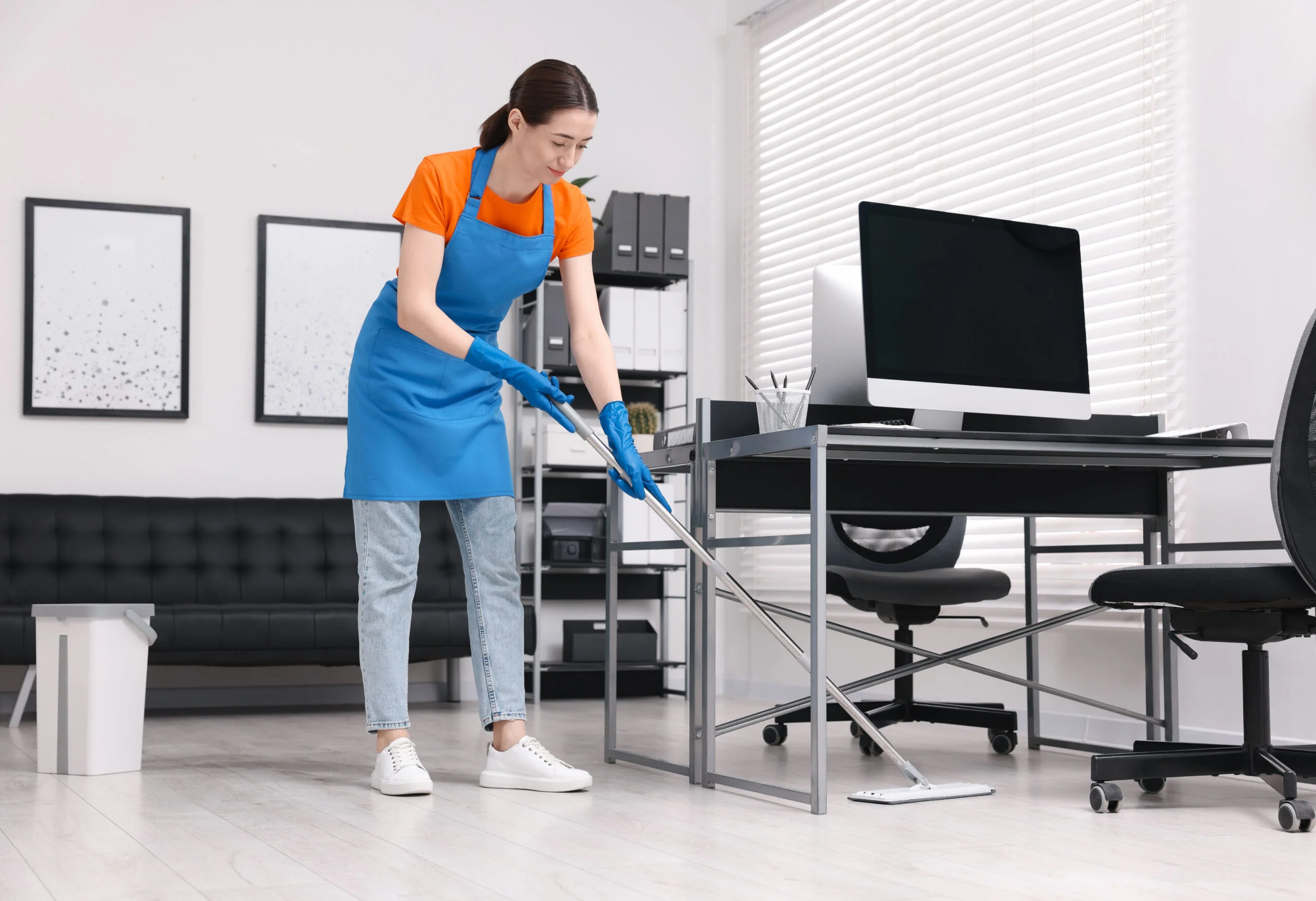
Selecting the right products is essential. Applying them correctly — with proper dwell times, correct dilutions, and surface-specific protocols — is where most in-house cleaning efforts fall short.
At YSMS, our schools and daycares cleaning program uses exclusively EPA-certified, eco-friendly products verified safe for high-contact children’s environments. Our color-coded microfiber system prevents cross-contamination between zones — restroom cloths never migrate to play surfaces or food prep areas — a detail that meaningfully reduces pathogen transfer beyond what product selection alone can accomplish. Across the Bay Area and Tri-Valley, dedicated account supervisors ensure these protocols hold consistently on every visit, not just the first.
Licensing compliance in California is tied to cleaning protocols, not just product labels. Our deep cleaning services cover the areas most prone to pathogen buildup: restrooms, nap areas, kitchen surfaces, and shared play equipment. And our 100% satisfaction guarantee — with a free re-clean within 24 hours — ensures you have real recourse if standards slip. That’s part of why YSMS maintains a 98% client retention rate across the Bay Area’s most demanding commercial and institutional facilities.
Whether your facility needs daily janitorial services or periodic deep disinfection, our team can build a customized cleaning program around your schedule, licensing requirements, and specific facility zones. No long-term contracts required.
Partner with Bay Area's Trusted School Cleaning Specialists
Safe cleaning in schools and daycares requires more than certified products on the shelf — it requires consistent application, trained staff, and a protocol built around children’s specific vulnerabilities. YSMS has spent 26 years building cleaning programs for sensitive Bay Area and Tri-Valley environments, from daycares and schools to medical facilities that demand strict compliance.
If your facility is ready for a child-safe, EPA-compliant cleaning program backed by a 100% satisfaction guarantee, call us for a free facility walkthrough or quote at (510) 731-8447.
Frequently Asked Questions
Sanitizing reduces germs to a safe level and is appropriate for food-contact surfaces and mouthable toys. Disinfecting destroys nearly all bacteria and viruses and is used on higher-risk surfaces like diaper tables, toilets, and doorknobs. Both steps require cleaning with soap and water first to be effective.
Yes. EPA Safer Choice-certified products meet both rigorous performance and safety standards. The California Childcare Health Program recommends Safer Choice, Green Seal, and UL ECOLOGO-certified products for licensed childcare facilities. Effectiveness and child safety are not a tradeoff — both can be achieved with the right product selection.
Yes, when properly diluted per the EPA-registered label instructions, applied only when children are not present, and allowed to fully dry before children return. Solutions degrade rapidly, so fresh batches should be prepared daily. Bleach should never be mixed with ammonia-based cleaners. For bleach-free facilities, EPA-registered botanical disinfectants offer comparable pathogen kill rates without fume risk.
At minimum once daily. In active daycare environments serving children in San Ramon, Pleasanton, and Livermore, many facilities disinfect doorknobs, table surfaces, shared supplies, and bathroom fixtures twice daily — especially during cold and flu season. Diaper changing surfaces must be cleaned and disinfected between each use per CDC guidelines.
Never use products labeled "DANGER," "CORROSIVE," or "FLAMMABLE." Aerosol sprays in enclosed rooms, undiluted concentrated bleach, and products with strong synthetic fragrances are all inappropriate for childcare settings. Disinfectant wipes (like standard Clorox or Lysol wipes) should never be used to clean children's skin or hands.
Ask for the product names and EPA registration numbers of every disinfectant and cleaner used in your facility. A trustworthy provider will have this documentation ready. YSMS uses exclusively EPA-certified, eco-friendly products in every school and daycare we serve across the Bay Area and Tri-Valley. Our 98% client retention rate reflects the confidence that school administrators and facility managers place in our protocols and standards.