
If your facility handles medical waste, sharps, or any bodily fluids, your cleaning crew isn’t just tidying up. They’re your frontline defense against a serious health and legal liability. Bloodborne pathogen compliance is one of the most overlooked pieces of the commercial cleaning conversation, and getting it wrong can put your staff, patients, and business at risk.
For Bay Area and Tri-Valley facility managers, this isn’t an abstract concern. Medical offices, dialysis centers, schools, and even standard office buildings can encounter blood or other potentially infectious materials. Knowing what OSHA and Cal/OSHA actually require of your cleaning vendor helps you avoid fines, protect your team, and choose a partner who takes the job seriously. This guide breaks down what the bloodborne pathogen standard covers, how Cal/OSHA’s rules differ from the federal baseline, and what to look for in a cleaning company that gets it right.
Why Bloodborne Pathogen Compliance Matters for Bay Area Businesses
Bloodborne pathogens are infectious microorganisms — most notably Hepatitis B, Hepatitis C, and HIV — carried in human blood and certain other body fluids. Exposure typically happens through needlesticks, cuts, or contact with contaminated surfaces.
Federal OSHA addresses this risk under 29 CFR 1910.1030. California employers must also follow Title 8, California Code of Regulations, Section 5193, which is generally stricter and more detailed than the federal rule. If your facility is in California, Cal/OSHA’s version is the one that actually governs your cleaning vendor’s obligations.
Facilities most exposed to this risk include medical offices, dialysis centers, schools with health rooms, and any property where injuries or medical events occur. Even standard office buildings occasionally see exposure incidents from first-aid situations. A cleaning crew without the right training can turn a minor incident into a serious compliance and health problem.
What Cal/OSHA's Bloodborne Pathogens Standard Actually Requires
Cal/OSHA’s Title 8, Section 5193 requires covered employers — including cleaning companies whose staff may reasonably encounter blood or other potentially infectious materials — to maintain several core protections.
A Written Exposure Control Plan
Every covered employer must have a written Exposure Control Plan (ECP) identifying which job roles face exposure risk and outlining the engineering and work-practice controls used to reduce it. This plan must be reviewed and updated regularly, not filed away and forgotten.
Engineering and Work-Practice Controls
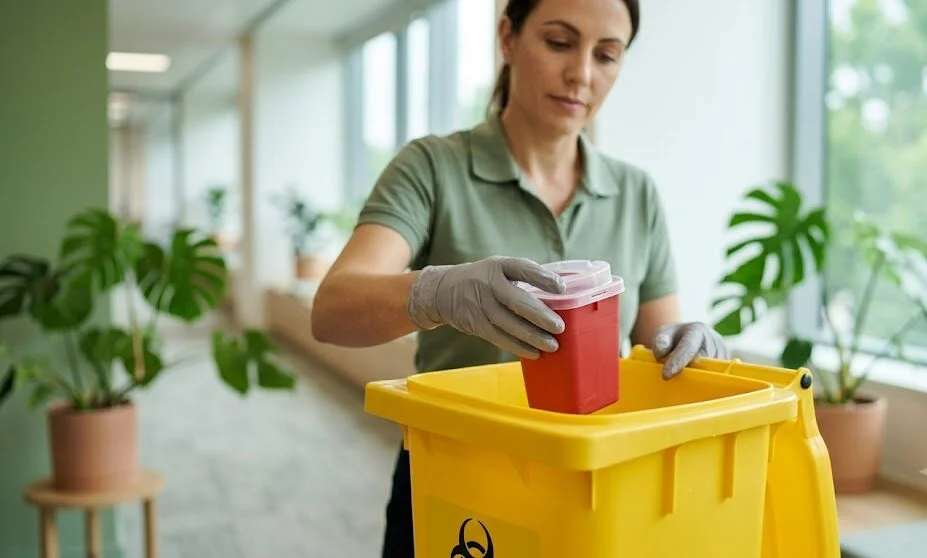
Cal/OSHA requires engineering controls, such as proper sharps disposal containers, as the first line of defense against exposure. This is where a structured, color-coded microfiber system also plays a role. Assigning specific cloths and mop heads to specific areas by color prevents cross-contamination between restrooms, break rooms, and higher-risk zones.
Personal Protective Equipment
Employers must provide appropriate PPE — gloves, gowns, face protection — at no cost to employees, along with training on when and how to use it correctly for each task.
Hepatitis B Vaccination
Employees with occupational exposure risk must be offered the Hepatitis B vaccination series at no cost, typically after initial training and before exposure-related tasks begin.
Sharps Injury Log and Recordkeeping
Employers must maintain a Sharps Injury Log documenting the date, type of sharp involved, and circumstances of each incident. This is separate from general OSHA injury recordkeeping and exists specifically to help employers identify patterns and prevent repeat incidents.
Common Mistakes Facilities Make When Vetting a Cleaning Vendor
Many facility managers assume “licensed and insured” automatically means bloodborne pathogen compliant. It doesn’t. Here’s what to watch for:
Assuming general cleaning training covers biohazard risk. Standard janitorial training and OSHA-specific bloodborne pathogen training are not the same thing. Ask vendors directly whether their crews receive dedicated training under Title 8, Section 5193.
Overlooking documentation. A compliant vendor should be able to show you their Exposure Control Plan and training records without hesitation. If they can’t produce documentation, that’s a red flag.
Ignoring crew consistency. Inconsistent staffing means retraining gaps. An account supervisor accountability model, where one point person oversees crew performance and compliance, closes this gap far more effectively than rotating, unsupervised staff.
Underestimating specialized environments. Medical offices and dialysis centers carry meaningfully higher exposure risk than a typical office. A vendor with dialysis center specialization understands protocols that generalist cleaning companies simply haven’t encountered.

How YSMS Approaches Bloodborne Pathogen Compliance
At Your Solution Maintenance Service, compliance isn’t an afterthought bolted onto our commercial cleaning services. Our OSHA-compliant protocols, combined with EPA-certified eco-friendly products, are built into how every crew operates across the Bay Area and Tri-Valley.
Our color-coded microfiber system prevents cross-contamination by design, not by accident. Every account is overseen by a dedicated supervisor, so compliance standards stay consistent even as staffing needs shift. And with 26+ years serving Bay Area facilities — including specialized experience with dialysis centers — we understand the difference between routine cleaning and risk-sensitive environments.
For facilities needing extra assurance during flu season or after an exposure incident, our COVID/disinfection cleaning services and deep cleaning options can be layered into your regular schedule through a customized service plan built around your facility’s actual risk profile.
We’re licensed, bonded, and insured with $2M in coverage, and we back every visit with a 100% satisfaction guarantee, including a free re-clean within 24 hours if something isn’t right. With a 98% client retention rate, most of our clients stay because the compliance and consistency actually hold up over time.
Protect Your Team With a Compliant Cleaning Partner
Bloodborne pathogen compliance isn’t something to guess about, especially in medical offices, dialysis centers, or any Bay Area or Tri-Valley facility where exposure risk is real. Your Solution MS builds compliance into every visit, backed by 26 years of experience and a team that treats your facility’s safety as seriously as you do.
Request a free facility walkthrough and quote today by calling (510) 731-8447, and let’s build a cleaning plan that keeps your team protected and compliant.
Frequently Asked Questions
It's a workplace safety regulation — 29 CFR 1910.1030 federally and Title 8, Section 5193 in California — requiring employers to protect workers from exposure to blood and other potentially infectious materials through training, PPE, and documented safety plans.
Yes. Cal/OSHA's standard applies to any employer whose staff could reasonably encounter blood or other potentially infectious materials while performing their job duties, including janitorial and commercial cleaning crews.
Training is required at the time of initial assignment to tasks involving exposure risk, with periodic refreshers as required by the employer's Exposure Control Plan.
It's a required record documenting each sharps-related exposure incident, including the date, type of sharp, and circumstances, so employers can identify patterns and improve prevention efforts.
Yes. Dialysis centers face elevated bloodborne pathogen exposure risk due to routine blood contact during treatment, which is why facilities in Pleasanton and similar communities benefit from a vendor with direct dialysis center cleaning experience.
Ask to see their written Exposure Control Plan, training records, and PPE protocols. A vendor with a 98% client retention rate and documented compliance history, like YSMS, should be able to answer these questions without hesitation.