
Hiring a cleaning company for a medical office is nothing like hiring one for a standard workplace. The stakes are higher. Your patients, staff, and reputation all depend on a facility that is genuinely clean — not just visually tidy. Yet many Bay Area medical offices make the mistake of choosing a cleaning vendor the same way they’d choose a general office cleaner: lowest bid, available schedule, decent reviews. That approach leaves real gaps — in compliance, in safety, and in the consistency your patients deserve. Before you sign anything, you need to ask the right questions. Here is a practical checklist to help you evaluate any medical facility cleaning service before they set foot in your clinic.
Why Medical Office Cleaning Requires a Different Standard
General commercial cleaning and healthcare cleaning are not the same discipline. A company that does excellent work in a tech office may be completely unprepared for the specific protocols a medical environment demands.
Medical offices deal with bodily fluids, pharmaceutical waste, immunocompromised patients, and strict regulatory requirements. One cross-contamination incident can spread illness, trigger a compliance review, or damage your practice’s reputation in ways that are very difficult to reverse.
That is why, across more than 26 years serving Bay Area and Tri-Valley facilities — including dialysis centers and specialty clinics — the team at YSMS treats healthcare cleaning as its own category, governed by its own standards.
Ask About Regulatory Compliance — Specifically
Start every conversation with a compliance question. A qualified medical cleaning company should be able to speak fluently about:
- OSHA’s Bloodborne Pathogen Standard: Cleaners working in medical environments must be trained to handle potential exposure to blood and other infectious materials. Ask whether their staff has completed this training and how often it is renewed.
- EPA-registered disinfectants: The products used in your facility must be EPA-registered for hospital-grade disinfection. Ask for the specific product names and their efficacy ratings.
- HIPAA-aware practices: Cleaning staff regularly access private areas of your office. Ask how the company handles confidentiality and whether their workers are briefed on HIPAA-sensitive environments.
If a vendor cannot answer these questions clearly and confidently, that tells you everything you need to know.
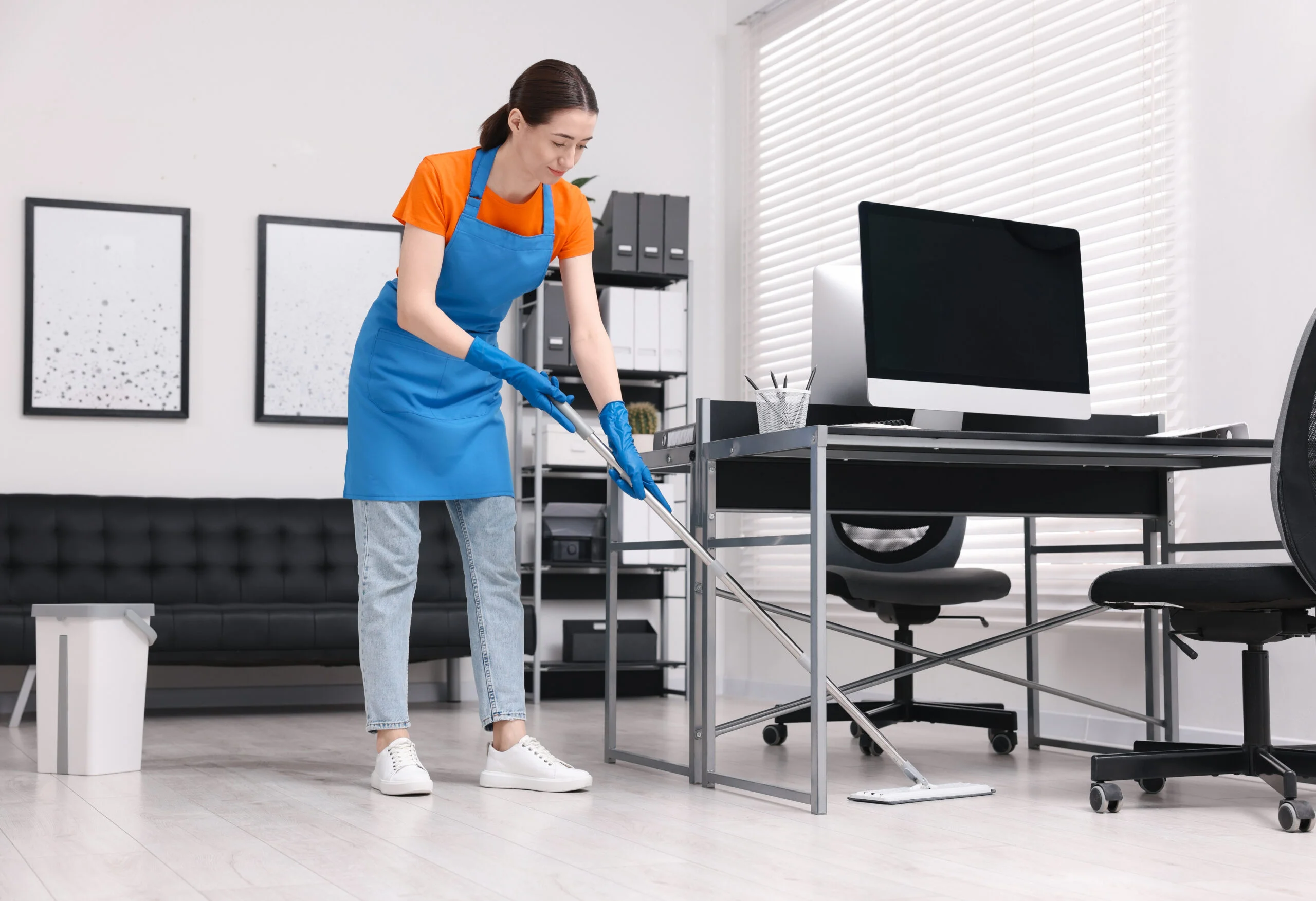
How Do They Prevent Cross-Contamination?
This is one of the most important — and most overlooked — questions in medical facility cleaning. Cross-contamination happens when bacteria or pathogens are unknowingly transferred from one surface or room to another via equipment, cloths, or hands.
Ask every prospective company: “What is your cross-contamination prevention system?”
A credible answer should involve more than just “we change our gloves.” Look for a structured approach. At YSMS, for example, our crews use a color-coded microfiber system — each color is designated for a specific zone (restrooms, exam rooms, common areas, etc.) and never crosses into another area. It is a straightforward system that eliminates one of the most common sources of healthcare-facility infection.
If a company has no documented system for this, they are not ready for a medical environment. This is also worth asking about when evaluating professional disinfection and COVID cleaning protocols, which have become a baseline expectation for healthcare settings.
Ask About Their Accountability Model
Cleaning quality is only as reliable as the people delivering it — and the oversight behind them. Inconsistent crews are one of the most frustrating problems Bay Area facility managers face.
Ask these accountability questions:
- Is there a dedicated supervisor assigned to your account?
- Will you have a consistent crew, or does staff rotate frequently?
- How are quality checks conducted, and how often?
- What happens if a cleaning falls short of expectations?
At YSMS, every account has a designated supervisor who conducts regular quality reviews. Our 98% client retention rate is not a marketing claim — it reflects what happens when consistent people follow a consistent process, every visit.
What Does Their Insurance Cover?
Do not skip this conversation. A cleaning company working in a medical environment must carry the right level of coverage.
Ask for proof of general liability insurance and verify the coverage amount. For medical facilities, $2M in coverage is a meaningful benchmark — it demonstrates that the company is serious about its risk exposure and yours.
YSMS is fully licensed, bonded, and insured to $2 million in coverage, which gives medical office managers the assurance that any incident is handled responsibly.
Also ask: does their coverage specifically address work performed in healthcare or clinical settings? Some general commercial policies exclude medical environments or have carve-outs that matter when you actually need to file a claim.

Can They Work Around Your Schedule?
Medical offices operate on tight schedules. Patients cannot be present during certain cleaning procedures, and the disruption to staff must be minimized.
Ask whether the company can perform cleaning after hours or on weekends. Ask about their policy when your schedule changes at short notice. And ask whether they require a long-term contract — or whether they are flexible.
YSMS operates without long-term contracts, which means your arrangement stays in place because it works — not because you are locked in. For offices looking for a customized cleaning plan that fits their specific hours and clinical layout, that flexibility matters.
You may also want to discuss whether your facility needs a scheduled deep cleaning on a quarterly or biannual basis, in addition to regular maintenance visits.
Is Your Medical Office Getting the Clean It Deserves?
If your Bay Area or Tri-Valley medical office is evaluating cleaning vendors, YSMS is ready to walk you through exactly how we approach healthcare environments — from cross-contamination protocols to after-hours scheduling. We offer a free facility walkthrough and quote so you can see our standards firsthand before committing to anything.
Call us at (510) 731-8447 or reach out at contact@yoursolutionms.com to schedule your consultation.
Frequently Asked Questions
Look for OSHA Bloodborne Pathogen training for all staff, use of EPA-registered hospital-grade disinfectants, and general liability insurance with at least $2M in coverage. Companies serving dialysis centers or specialty clinics should have additional protocol training specific to those environments.
Most medical offices benefit from daily cleaning of high-touch surfaces, restrooms, and waiting areas. Exam rooms typically require cleaning between each patient. A quarterly or biannual deep cleaning handles the areas that routine maintenance cannot reach. Your cleaning company should help you build a schedule based on your patient volume.
While cleaning companies are not directly covered entities under HIPAA, their staff regularly access areas with sensitive patient information. Any reputable medical office cleaner should train their workers on confidentiality expectations and handle scheduling and access in a way that respects patient privacy.
Ask specifically about a color-coded microfiber or equipment system that separates tools by zone — restrooms, exam rooms, and common areas should never share the same cleaning materials. If a company cannot describe a documented system, that is a significant red flag for any clinical environment.
Yes. YSMS serves medical offices throughout the Tri-Valley including Pleasanton, San Ramon, Danville, Dublin, and Livermore, as well as Fremont, Walnut Creek, and the broader East Bay. We are locally owned and have served Bay Area healthcare facilities for over 26 years.
Ask for their client retention rate, how long they have been serving medical or healthcare clients, and whether they can provide references from similar facilities. YSMS maintains a 98% client retention rate and has specialized experience in healthcare environments, including dialysis centers — one of the most protocol-intensive cleaning environments in the industry.