
Your floors take more punishment than almost any other surface in your facility. Every footstep, every furniture drag, every spill works against the finish layer protecting your flooring investment. Yet when it comes to commercial floor care, most facility managers face the same confusion: do you strip? Seal? Wax? Polish? And how do you know which one your floors actually need right now? After 26 years of maintaining floors across Bay Area offices, medical facilities, schools, and industrial complexes, the team at Your Solution Maintenance Service has a clear answer: the right floor care method depends on your floor type, your traffic volume, and the current condition of your finish. This guide breaks it all down — no jargon, no upsells, just what works. If you’re already working with a commercial cleaning Bay Area provider and floors still look dull or worn, this post will help you identify exactly what’s missing from your current program.
Why Commercial Floor Care Is More Than Mopping
Routine mopping removes surface dirt. But underneath that clean-looking surface, floor finish accumulates in layers over months and years. Each new coat of wax bonds to the previous layer — and without proper stripping, that buildup turns yellow, traps grime, and creates a surface that looks perpetually dirty no matter how often you mop.
This is one of the most common problems our teams encounter when taking over accounts from other providers. The floors aren’t dirty — they’re over-finished. And that distinction matters enormously for both appearance and cost.
Beyond aesthetics, floor condition is a compliance issue. OSHA and California workplace safety standards require slip-resistant surfaces in commercial spaces. Worn, over-buffed, or improperly sealed floors create liability exposure that Bay Area businesses cannot afford to ignore.
Our professional floor care and polishing service addresses all four stages of floor maintenance — stripping, sealing, waxing, and polishing — matched precisely to each floor type and wear pattern.
Understanding the Four Methods: What Each One Actually Does
1- Stripping
Stripping removes all existing finish layers down to the bare floor. It’s the reset button — and you need it when finish buildup has become visible, when floors are yellowing despite regular mopping, or when you’re switching floor care products.
Stripping involves a chemical stripper, a floor machine, and wet vacuuming. It’s labor-intensive, which is why it should be scheduled strategically — typically once or twice per year for high-traffic facilities, and less frequently for lower-traffic areas. Skipping stripping when it’s needed is a false economy. More wax coats applied over damaged finish won’t restore the floor’s appearance — they’ll make it worse.
2- Sealing
After stripping, bare floors need a sealer before any finish is applied. Sealers penetrate the floor material — particularly important for porous surfaces like concrete, terrazzo, and unfinished VCT — and create a protective barrier that prevents staining and improves finish adhesion.
Not all floors need sealer every time you strip. Factory-finished VCT, for example, may only need resealing after deep stripping or mechanical damage. Your floor care provider should assess this on a case-by-case basis.
3- Waxing (Finish Application)
Commercial floor wax — more accurately called “floor finish” in industry terms — is applied in thin, even coats after sealing. Most commercial applications require three to five coats, each allowed to dry before the next is applied.
Floor finish determines your floor’s gloss level, slip resistance, and durability. High-solid finishes last longer in high-traffic zones but require more skill to apply without streaking or bubbling. This is precisely why janitorial services that include trained floor technicians — not just general cleaners — produce consistently better results.
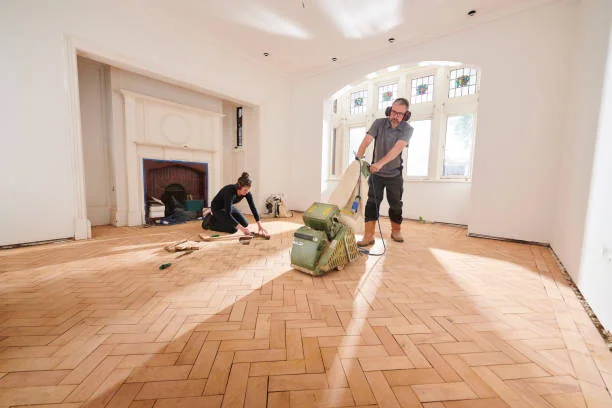
4- Polishing and Burnishing
Polishing uses a high-speed burnisher to restore the gloss level of an existing floor finish without adding new product. It generates heat that temporarily melts the top layer of finish, smoothing out micro-scratches and restoring shine.
Burnishing is the most cost-effective floor care step on a recurring basis — typically done monthly or quarterly depending on traffic. It extends the life of your wax job and reduces how frequently you need full strip-and-recoat cycles.
Matching the Method to Your Floor Type
Not all commercial floors respond the same way. Here’s how the method selection changes based on material:
VCT (Vinyl Composition Tile)
VCT is the most common commercial floor in Bay Area offices, schools, and retail spaces. It’s highly responsive to the full strip-seal-wax-burnish cycle. High-solid finish applied in five coats, maintained with monthly burnishing, is the industry standard.
Hardwood
Commercial hardwood floors — common in Tri-Valley professional offices and reception areas — should never be stripped with chemical strippers. They require hardwood-specific cleaning products and periodic screen-and-recoat procedures rather than traditional waxing. Burnishing is generally not appropriate for hardwood.
Concrete and Epoxy
Sealed concrete and epoxy floors in industrial settings need diamond polishing or densifier treatments — not traditional floor wax. Waxing concrete is one of the most common mistakes we see, and it creates a slippery, peeling surface that looks worse after treatment than before.
Luxury Vinyl Plank (LVP) and Laminate
These surfaces require no-wax maintenance programs. Low-pH floor cleaners and occasional burnishing are appropriate; stripping chemicals will damage the wear layer permanently.
For facilities with mixed floor types — a common situation in Bay Area multi-tenant office buildings — your commercial cleaning provider should conduct a floor assessment before recommending any program.
How Often Should Each Step Be Scheduled?
Frequency depends on foot traffic, but here’s a general framework that works well for most Tri-Valley commercial facilities:
Daily or weekly day porter services cover dust mopping and damp mopping — the routine layer. Burnishing typically runs monthly in moderate-traffic areas and bi-weekly in high-traffic lobbies and corridors. Stripping and recoating is a quarterly or semi-annual task for most commercial facilities.
The goal is to never let finish degradation get ahead of your maintenance schedule. When burnishing stops restoring gloss, it’s time to strip. Waiting longer doesn’t save money — it increases the labor required for restoration and can permanently damage some floor materials.
Our account supervisors track each client’s floor condition and flag when a strip-and-recoat cycle is approaching — so Bay Area facility managers aren’t guessing. That accountability model is one reason YSMS maintains a 98% client retention rate across our entire service portfolio.
If your current provider isn’t proactively managing your floor cycle, our deep cleaning services include a full floor assessment as part of every initial walkthrough.
Frequently Asked Questions
If burnishing no longer restores your floor's gloss — or if the surface looks yellow, hazy, or patchy despite regular mopping — it's time to strip. Polishing works only when the underlying finish layers are still in good condition. When finish has degraded or built up unevenly, stripping is the only reset.
Most commercial facilities in San Ramon and Pleasanton benefit from stripping and recoating one to two times per year. High-traffic spaces like lobbies, cafeterias, and medical waiting rooms may need it quarterly. Routine burnishing between strip cycles significantly extends the interval.
No. Luxury vinyl plank and laminate floors have a factory wear layer that traditional wax and stripping chemicals will damage. These floors require no-wax maintenance — specific low-pH cleaners and gentle burnishing if the manufacturer approves it. Always verify your floor manufacturer's maintenance recommendations before applying any product.
"Floor wax" is a legacy term. Modern commercial products are acrylic polymer floor finishes — they contain no actual wax. Floor finish is harder, more durable, and more consistent than traditional wax. When a vendor quotes "waxing services," confirm they're using a commercial-grade acrylic finish rated for your floor type and traffic volume.
In regulated environments like dialysis centers in Fremont or Dublin, floor care products must be carefully selected to avoid chemical residues that can affect patient safety. YSMS uses EPA-certified, low-VOC floor care products across all accounts, and our crews are trained in HIPAA-compliant facility protocols. We're one of the few Bay Area providers with specialized dialysis center experience.
California follows OSHA General Industry Standards for slip resistance, with specific requirements for wet-process areas and public corridors. Over-burnished or improperly finished floors can fall below required static coefficient of friction thresholds. Your floor care provider should be able to confirm that the finish products and application methods they use maintain compliance — not just aesthetics.